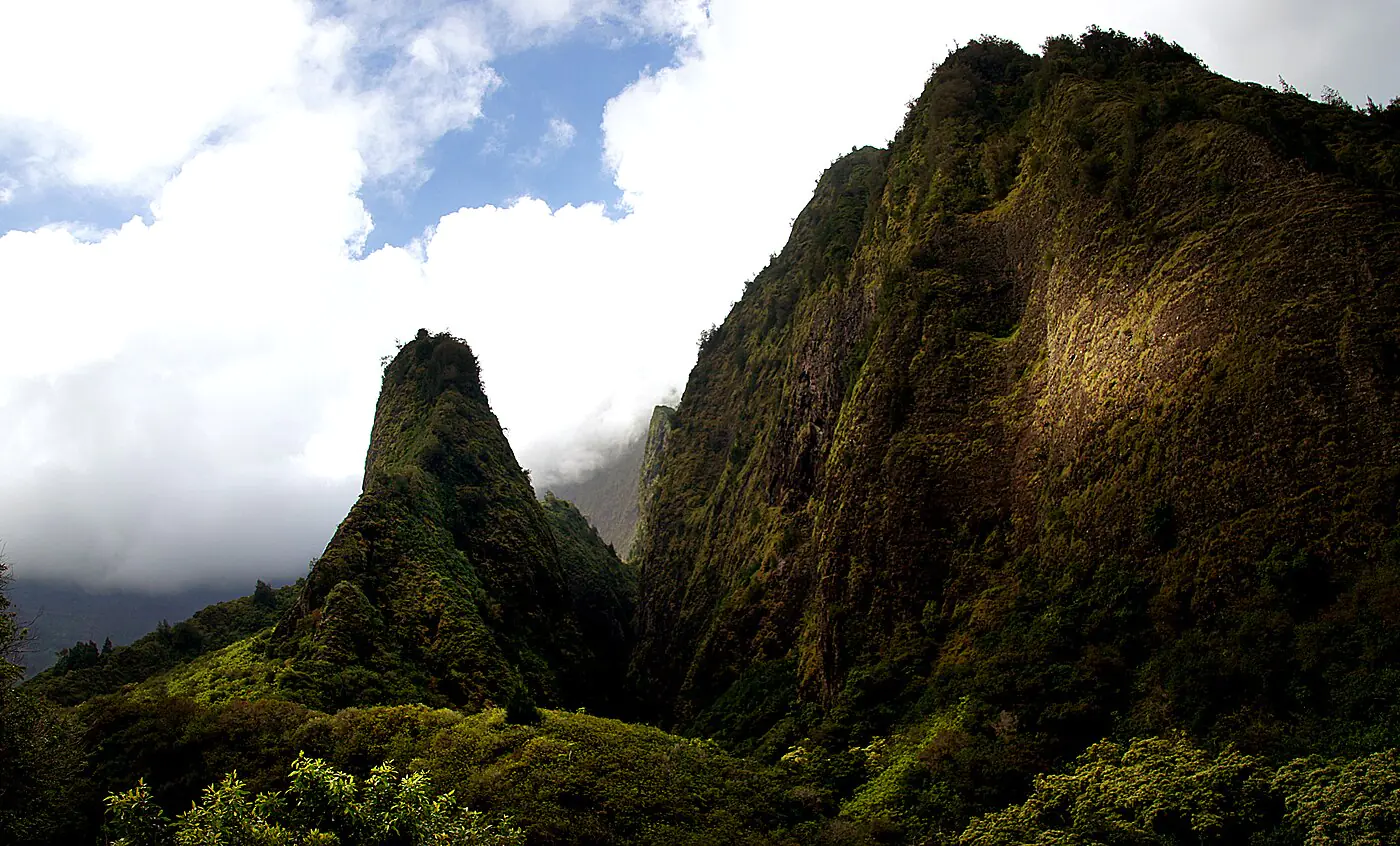
ʻĪao Valley and the Needle
A green needle 1,200 feet tall, a valley Kamehameha turned into history, and the wettest, greenest pocket of West Maui.
The short version
- Out-of-state visitors need a reservation — book entry and parking at gostateparks.hawaii.gov ($5 per person plus $10 parking); Hawaiʻi residents enter free with ID. The gate runs 7 am to 6 pm daily.
- Kūkaʻemoku — the ʻĪao Needle — rises 1,200 feet from the valley floor, a green blade of ridge left standing while erosion carved everything around it; the paved 0.6-mile walk reaches the classic viewpoint in twenty unhurried minutes.
- In 1790, Kamehameha I’s forces met Maui’s army here; the fighting choked the stream and gave it the name Kepaniwai — the damming of the waters. The valley was the burial place of chiefs long before that, which is why signs ask visitors to stay on the paths. Honor it.
- This is one of the wettest corners of the islands — Puʻu Kukui above the valley catches rain nearly year-round — so the walls run green all twelve months and showers pass through most afternoons without apology.
- Kepaniwai Park, on the drive in, keeps heritage gardens and pavilions for the island’s plantation-era cultures — Hawaiian, Japanese, Chinese, Portuguese, Filipino — a worthwhile half hour stacked onto the valley visit.

Getting there
The valley sits at the end of ʻĪao Valley Road, ten minutes above Wailuku and about twenty from Kahului — follow Main Street west until it becomes the valley road and ends at the monument lot. There is no transit to the gate; drive, or fold the valley into a guided island day. Reservations for non-residents cover a timed parking window — arrive inside it.
The day
This is a half-morning, done right. Arrive near opening when the ridges still hold their shadows, walk the paved loop to the Needle overlook, and take the stream-side spur where the water runs cold out of Puʻu Kukui’s rain. Read the battle interpretation — briefly, soberly — and let the green do the rest. Add Kepaniwai Park’s gardens on the way down, then Wailuku’s old main street for coffee or saimin; pairing the valley with Makawao or the north-shore lookouts fills the rest of a West-Maui day without doubling back.
When to go
Mornings, year-round — the valley is greenest and clearest before the clouds build against the ridges, and afternoon showers are close to scheduled. No season turns it off; winter brings heavier bursts and fuller waterfalls on the walls. The lot is smallest early, which is also when the light is best — the reservation system has mostly ended the midday crush.
Frequently Asked Questions
Do you need a reservation for ʻĪao Valley?
Out-of-state visitors, yes — entry ($5) and parking ($10) book through the state parks site, and the gate cannot sell walk-ups to non-residents. Hawaiʻi residents enter free with ID.
How hard is the walk?
Easy — a paved 0.6-mile route with stairs to the Needle viewpoint and a gentle streamside loop, comfortably done in under an hour. It is a lookout walk, not a hike; the ridges themselves are closed and sacred.
What is the ʻĪao Needle?
Kūkaʻemoku, a 1,200-foot erosional blade of ridge wrapped in green — the hard remnant left as the valley wore away around it. It served as a lookout in the 1790 battle and serves as the island’s most photographed interior view now.
What happened at Kepaniwai?
Kamehameha I’s invasion force defeated Maui’s army in the valley in 1790 in fighting fierce enough that the dead dammed the stream — Kepaniwai means ‘the damming of the waters.’ The valley was already sacred as a burial place of chiefs; visit accordingly.
How long does ʻĪao Valley take?
One to two hours covers the walk, the viewpoints, and the stream — add a half hour for Kepaniwai Park’s heritage gardens on the drive out. It pairs naturally with Wailuku town for the rest of the morning.