The First Boat to Molokini
A sunken crater’s crescent rim, water clear past a hundred feet, and the best snorkeling in Hawaiʻi — if you take the early boat.
The short version
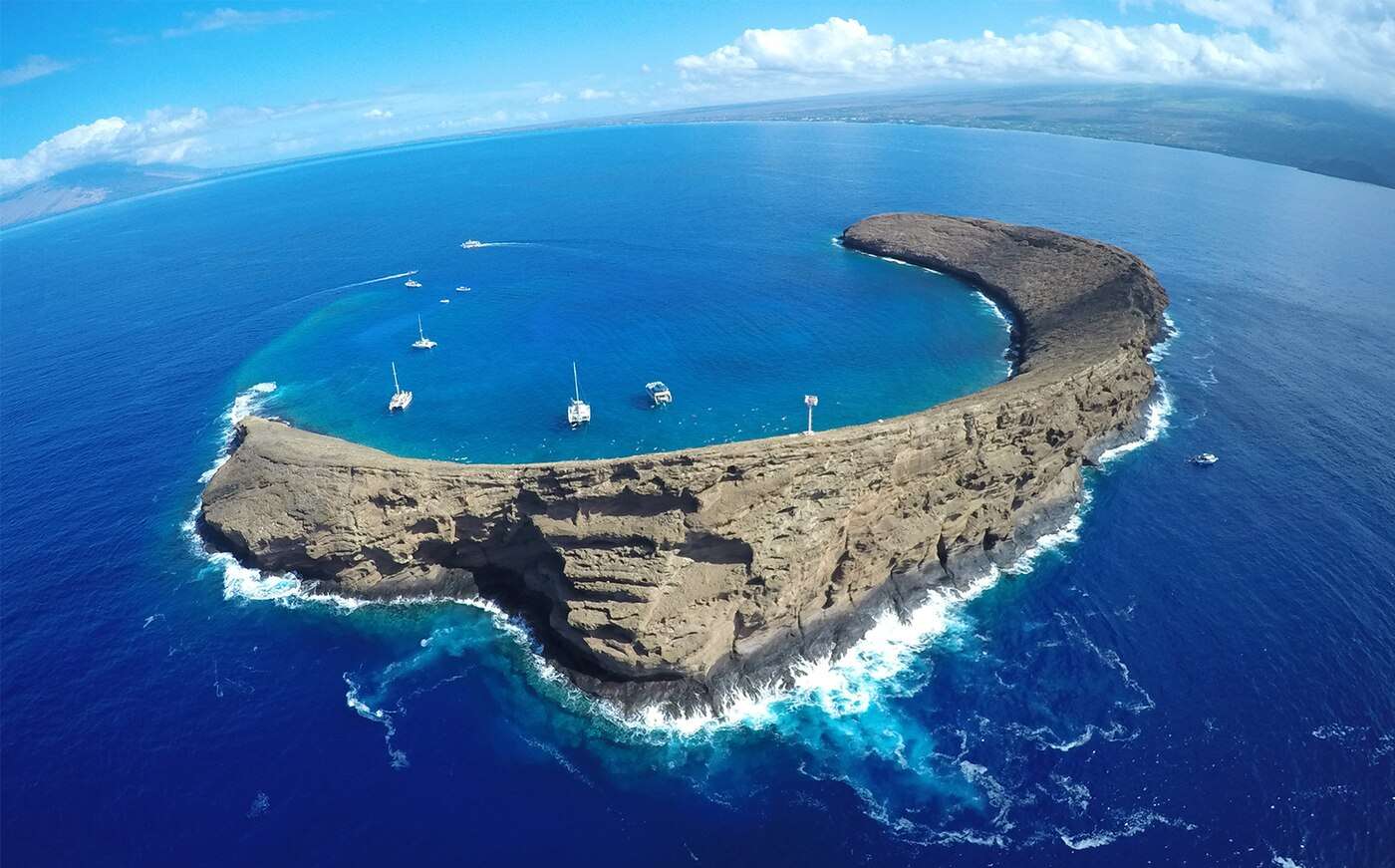
- Molokini is the drowned rim of a volcanic crater three miles off Maui’s south shore — a crescent that blocks the swell, holds a reef in its bowl, and gives Hawaiʻi its most dependable hundred-foot visibility. The crater and its waters are a Marine Life Conservation District — rules at dlnr.hawaii.gov.
- Boats leave Maʻalaea Harbor from early morning, and the early departures are the entire game: glassy water, the reef to the first arrivals, and the crossing done before the wind. By late morning the channel chops up and the crater fills with fins.
- The bowl runs shallow coral gardens into deeper blue, with butterflyfish, parrotfish, tangs, and eels working the reef by the hundred-species — plus reef sharks minding their own business and, in winter, humpback song carrying through the hull and the water itself.
- The outside of the crescent — the Back Wall — drops a sheer 200-plus feet into open blue and is for experienced divers on drift trips, not snorkelers; the inside bowl is the gentle, protected half of the island’s split personality.
- Above the waterline Molokini is a seabird sanctuary — no landing, ever — and below it the conservation rules are blunt: no touching, no standing on coral, no feeding, and Hawaiʻi’s reef-safe sunscreen law means mineral-only lotion, applied before you board.

Getting there
Trips run from Maʻalaea Harbor on Maui’s south shore — ten minutes from Kihei, thirty from Kahului or Lahaina side — with check-ins from very early morning. The crossing takes 45 minutes to an hour depending on the boat, and the fleet ranges from big catamarans with breakfast to small rafts that get there first. There is no public landing and no way to visit except by permitted boat; book a day or two ahead in high season and ask explicitly whether the trip guarantees Molokini or ‘Molokini conditions permitting.’
The day
Check in at dawn, cross as the light comes up — whales escorting in winter — and drop into the bowl while it is still glass. The first hour is the postcard: coral gardens sloping into blue, fish traffic ignoring you completely, visibility that makes depth guesses embarrassing. Most boats pair the crater with a second stop — Turtle Town’s coastal reef for honu almost guaranteed — before the wind writes the schedule’s ending. Back at Maʻalaea by early afternoon with the whole second half of the day intact: Kihei beaches southward or the harbor’s fish tacos immediately.
When to go
Year-round, mornings only in spirit: the crater works every season, and the early-boat rule never relaxes. Winter adds humpbacks to the crossing and occasional swell that cancels or reroutes trips — build one flex day in whale season. Summer brings the calmest, clearest stretches. Whatever the month, the afternoon wind is a promise, not a risk.
Frequently Asked Questions
How do you get to Molokini?
Permitted snorkel and dive boats from Maʻalaea Harbor — 45 minutes to an hour out, no landings, no exceptions. Book ahead and take the earliest departure you can face.
Why do the early boats matter so much?
Morning means flat water, long visibility, and the crater at its emptiest; by late morning the trade wind chops the channel and the fleet stacks up. The 7 am crowd sees a different Molokini than the 11 am crowd.
What will you actually see?
Coral gardens with reef fish in the hundreds of species — butterflyfish, parrotfish, tangs, eels — the occasional whitetip reef shark at a polite distance, and in winter, humpback song in the water. Visibility routinely passes 100 feet.
Is Molokini good for first-time snorkelers?
Yes — the inner bowl is calm, protected, and patrolled by crews used to beginners, with flotation offered on every boat. The Back Wall drift dives on the crater’s outside are the experts-only half.
What are the rules?
It is a Marine Life Conservation District and a seabird sanctuary: no landing on the rim, no touching or standing on coral, no feeding fish, and mineral-only reef-safe sunscreen under Hawaiʻi law. The clarity you came for is the direct product of the rules.