The Road to Hana: 600 Curves, the Black-Sand Reservation, and the Discipline That Makes It Work
Sixty-four miles, six hundred curves, fifty-four bridges — the drive is the destination, and it runs on three disciplines: leave at dawn, book the black-sand beach, and let the locals pass.
The short version
- The road proper runs Paia to Hana — 64 miles that take two and a half hours without stops and all day with them, which is the point; the dawn start in the alarm is the difference between a drive and a queue.
- Wai’anapanapa State Park — the black-sand beach, sea caves, and coastal trail near Hana — requires advance timed reservations for entry and parking, booked at gostateparks.hawaii.gov; no reservation, no entry, enforced.
- The stop shortlist that repays its minutes: Twin Falls early if the lot allows, Ke’anae Peninsula’s lava-and-taro detour, Wailua Valley overlook, halfway banana bread at the roadside stands, and the black sand as the crown.
- Beyond Hana town, the Kipahulu district of Haleakalā National Park ($30 vehicle) holds the Pools of ‘Ohe’o and the Pipiwai Trail’s bamboo forest to Waimoku Falls — the drive’s best actual hike when open; conditions at nps.gov/hale.
- The ‘back road’ continuing around the island past Kipahulu runs unpaved stretches that some rental agreements exclude — check yours before planning the loop, and take the honest answer.
- Hana itself is a small, real town, not a finish-line attraction — buy lunch, buy local, and treat the place as somewhere people live, because it is.

Getting there
Position the night before matters: Paia or Kahului starts beat West Maui by an hour of pre-road driving. Fuel in Paia (the last station), provisions likewise, offline maps per the alarm, and motion-sickness strategy for the susceptible — six hundred curves mean it. The reservation architecture sets the schedule: your Wai’anapanapa window anchors the day’s middle, and Kipahulu’s addition decides whether the turnaround comes at Hana or beyond.
The day
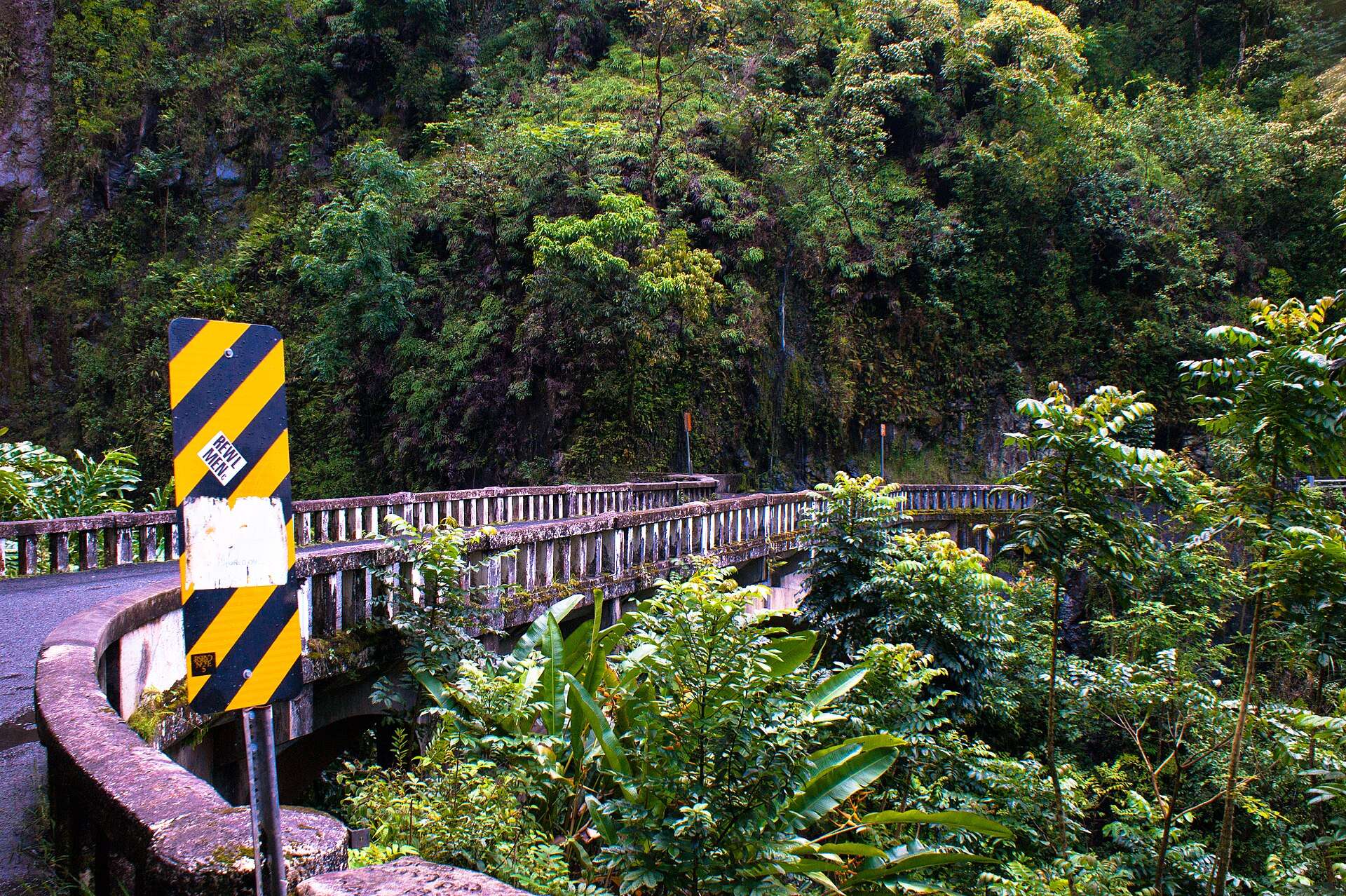
Drive more than you stop in the first hour — the early miles’ waterfalls photograph like the later ones and cost you the lead you built by waking early. Ke’anae’s peninsula detour is the first mandatory: lava coast, taro fields, and the aunties’ banana bread if the timing lands. Roll through the rainforest miles with the pull-over discipline running both directions — letting locals pass and claiming the one-car bridges by the courtesy rhythm the road teaches fast. The black-sand window arrives mid-day: caves, the coastal trail’s twenty minutes, and the sand itself. Hana for lunch, then Kipahulu’s bamboo cathedral on the Pipiwai Trail if booked energy allows — two hours well spent. The return drive runs the same road backward in better light with emptier pullouts, or the back road for the cleared and confident. Home by dark, tired in the specific way this road manufactures.
When to go
The road runs year-round; April through September tilts drier, and winter swells the waterfalls the summer trickles. Rain is part of the ecosystem’s contract — brief, warm, and the reason everything is that green; only flash-flood advisories (posted, respected) change plans. Weekdays thin the convoy meaningfully. The one universal: whatever the month, the 7am departure is the difference between the road’s two personalities, and the alarm already chose for you.
Frequently Asked Questions
Can I do it without the dawn start?
You can do a slower, more crowded, more brake-lit version of it — the road physically allows a 10am start and experientially punishes it. If dawn is impossible, consider driving it ‘backward’ (Kipahulu first via the back road, conditions and rental terms permitting) or making peace with the queue.
Is the drive dangerous?
It’s narrow, winding, and demands attention — but it’s a paved, maintained highway driven daily by school buses. The risks are impatience and distraction, both optional. The back road past Kipahulu is the segment with genuine caveats.
What if Wai’anapanapa is sold out?
Windows release ahead on a rolling basis — check early and check back for cancellations. Without it, the day still holds Ke’anae, the overlooks, and Kipahulu; the black sand just isn’t improvisable anymore, which is the reservation’s whole point.
Should I stay overnight in Hana?
It’s the connoisseur’s answer — the road empty at both ends of the day, the town at its own pace, Kipahulu at opening. As a day trip the drive works fully; as an overnight it relaxes into something better.
Guided tour or self-drive?
Tours remove the driving stress and the passenger’s motion-sickness lottery decides for some groups. Self-driving keeps the stops sovereign, which is most of the road’s pleasure. The disciplines in the alarm apply identically to both.